Friday, September 29, 2017

Short Paper #2: A Closer Look


“For truth, properly considered, is about the relationship between language and the world, not about photographs and the world.” (Errol Morris)

For your second short paper, I want you to choose a photograph, painting, or significant work of art that has no words. It should be an image that is complex enough to be read or interpreted in a number of ways, and might even be confusing on first glance. In your paper, I want you to describe the image as if the reader has never seen it. This means you have to describe the image in as much detail as possible, and make sure we can see all the important aspects of the work as if it was sitting right before us. Be descriptive, and help us see what you see when you look at it. Again, don’t assume we can see it, so if you find yourself saying “the guy here looks weird,” tell us why he looks weird.

However, here’s the trick: as you describe the photograph, painting, etc., I want you to analyze and explain it. For example, if you were describing the photograph “Sharbat Gula,” try to make us see the girl you see—either a refugee, or a victim, or an assassin. Use details in the painting to illustrate why you see her this way and make us see it, too. Imagine that you’re a tour guide taking us on a tour of this work, and say “if you look here, you can see why she’s full of despair and turmoil,” etc. Use your descriptions to interpret her character, background, or personality for the reader. Help us see the “inside” of the photograph/painting, that isn’t actually observable—but that you see based on the clues and inferences of the work.

EXAMPLE: Remember how Armstrong and Miller help us see Marie through their descriptions: “To Marie, it seemed the questioning had lasted for hours. She did what she always did when under stress. She flipped the switch, as she called it, suppressing all the feelings she didn’t know what to do with. Before she confessed to making up the story, she couldn’t look the two detectives, the two men, in the eye. Afterward, she could. Afterward, she smiled” (226).  If we were looking at Marie as a photograph, we would only see her smiling and looking calm, and would think, “gee, she doesn’t seem too upset by all of this.” But the writers show us why she doesn’t, and how she copes so that changes the way we see her, too. So help us see who she is on the inside, even though we can’t prove this—it’s just a gut feeling based on how you read and interpret the work.

REQUIREMENTS
  • 2-3 pages, double spaced
  • Description and attention to detail: help us see the work without having to see it
  • Analysis: make sure you help us see the ‘inside’ of the work, which isn’t based on observable fact (we can’t prove it), but is based on how you interpret the clues and inferences in the painting
  • DUE THURSDAY, OCTOBER 5th by 5pm


Friday, September 22, 2017

For Tuesday: Armstrong & Miller, “An Unbelievable Case of Rape” (p.203-240)

Detective Galbraith and Sgt. Hendershot from the article (see more pictures in the link below)


Answer TWO of the following:

Q1: According to the article, what made it so difficult (and take so long) to catch O’Leary? What “break” did they eventually catch, and how common do you think it is to catch such breaks in similar crimes?

Q2: The authors write that “Investigators…should not assume that a true victim will be hysterical rather than calm, able to show clear signs of physical injury, and certain of every detail. Some victims confuse fine points of ever recant. Nor should police get lost in stereotypes” (216). Based on the article, why did Marie act so unconventionally and often recant or alter her original statement? In other words, why did she “look guilty” even though she was completely innocent?

Q3: According to FBI estimates, only “5 percent of rape cases [are] unfounded or baseless”(220). However, from 2008 to 2012, the Lynnwood police department “determined that ten of forty-seven rapes reported to Lynnwood police were unfounded—21.3 percent. That’s five times the national average of 4.3 percent for agencies covering similar-sized populations during that same period” (239). What do you think accounts for this? Was it lack of resources? Misinformation or ignorance about race? Or stereotypes about teenagers or women victims?

Q4: Why do the authors take the unusual approach of switching the point of view on page 233 to O’Leary’s perspective? Since this is fiction, based on what they assume he thought (and what he told police) why include it in a piece of journalism? How does this affect the story and your own emotional response to it? What do you think they wanted it to do to the reader? 

Tuesday, September 19, 2017

Conversation Paper Resources

Responding to the Conversation: Using Quotes

“But the gap between what we know and what we should do about it is getting bigger and bigger, and the action really needs to turn to responding. Otherwise, we’re going to be hammered. I’ve been through one of these massive earthquakes in the most seismically prepared nation on earth. If that was Portland”—Goldfinger finished the sentence with a shake of his head before he finished it with the words. “Let’s just say I would rather not be here” (Schulz 193).

The Quotation Sandwich: Introduction + Quotation + Response
In her essay about the next “big one” in the Pacific Northwest, Schulz writes, “But the gap between what we know and what we should do about it is getting bigger and bigger, and the action really needs to turn to responding. Otherwise, we’re going to be hammered” (193).

OR—

In the essay, “The Really Big One,” the author explains that,
            the gap between what we know and what we should do about it is getting bigger and                 bigger, and the action really needs to turn to responding. Otherwise, we’re going to be             hammered. I’ve been through one of these massive earthquakes in the most                               seismically prepared nation on earth. If that was Portland”—Goldfinger finished the                 sentence with a     shake of his head before he finished it with the words. “Let’s just                   say I would rather not be here. (Schulz 193)

 Then, Respond…
In other words, we can no longer pretend it will happen “one day” and slowly decide what to do when it comes. We have to assume that it will happen, far sooner than later, and look at how other countries, such as Japan, prepare for such events. The more we learn, the more we realize how unprepared we truly are, and that’s the most important conversation we can have in this country.

CITING A FILM: If you decide to use Command and Control in your paper, obviously you can't quote it (unless you took really good notes). Instead, be sure to introduce it as usual and discuss specific aspects or ideas from the film. You don't need to cite it with a page number, etc., but do cite the film after summarizing/discussing it and include it in your Works Cited page. For example...

In the film Command and Control, we learn that during the first hydrogen bomb test, there was a legitimate fear that the resulting explosion would set fire to the Earth's atmosphere and kill everything on the planet. Yet they decided it was worth the risk and performed the test (Kenner).

The Works Cited Page
Schulz, Kathryn. “The Really Big One.” The 2016 Best American Magazine Writing. ed. Sid
            Holt. New York: Columbia University Press, 2016.

OR from the website:
Schulz, Kathyrn. “The Really Big One.” The New Yorker On-Line. 20 July 2015.
https://www.newyorker.com/magazine/2015/07/20/the-really-big-one

To cite a film:
Command and Control. Dir. Robert Kenner. American Experience Films, 2016. 

NOTE: For General Citation Information, visit the Purdue OWL (On-line Writing Lab) at this address: www.owl.english.purdue.edu


Wednesday, September 6, 2017

Conversation Paper #1: Taking a Seat at the Table

[NOTE: The questions and reading for Tuesday are in the post below this one...] 

Writing a paper is all about choosing what conversation to have with your readers. So far in class, we’ve discussed three essays (with two more to come) that each introduce an important conversation to the public. Yet even though each one is on a different topic—earthquakes, ebola, and immigration—they all have a number of similarities. The closer we read these essays, the more we realize that they actually share many of the same issues and dilemmas. A good writer quickly realizes that any discussion takes place at more than one table, so you have to decide which table is most important for your readers to take a seat at, at least to get started.

For this paper, I want you to choose 2 of the 5 essays below to introduce a specific conversation that both share, and that are important for your readers to see, understand, and take part in:
  • Schultz, “The Really Big One”
  • Hammet, “My Nurses Are Dead”
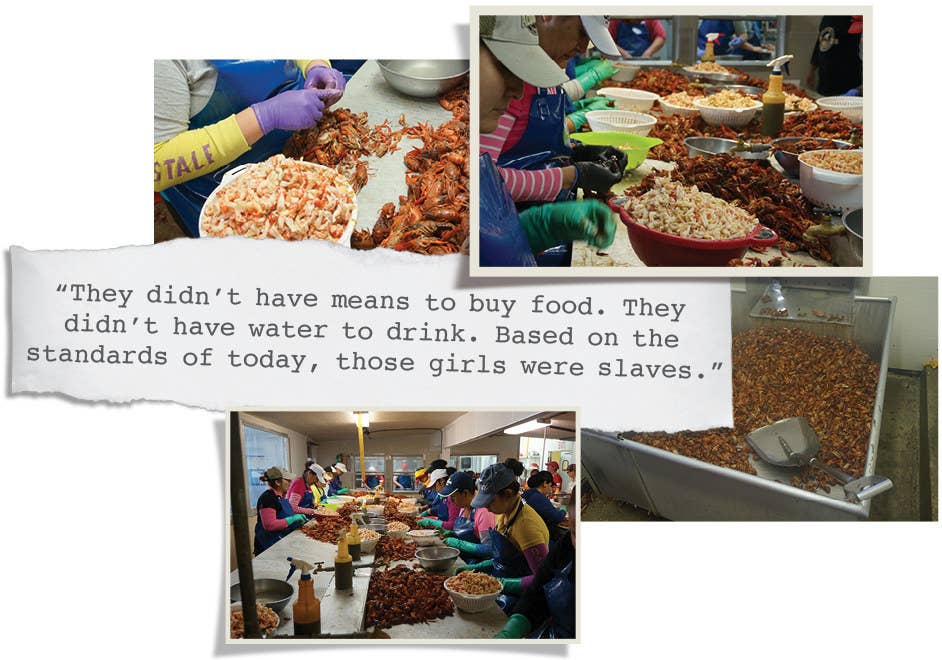
  • Garrison, etc. “The New American Slavery” 
  • Garrison, etc. "All You Americans are Fired
When picking your conversation, it can be anything that unites the two essays into a specific and focused discussion. It doesn’t have to be literal (earthquakes, for example), but should be about a bigger issue that each one shines a light on. For example, you could write a paper about “why we don’t prepare for disasters” which uses Schultz and Hammet’s essays; or, you could discuss “justice in America” using both of Garrison's essays, etc. Anything works, so long as you can use each essay to help introduce the conversation and develop it in ways that tell your reader why it matters.

IN ADDITION, you need at least one outside source to add to this conversation. Invite someone else to the table. It could be another article about the Cascadia subduction zone, or a website about rape statistics, etc. But it should be a relevant article that adds to the conversation and helps us explore it. (We’ll talk about finding sources in class on Tuesday)

SOME TIPS TO STRUCTURE THIS PAPER
  • Must introduce a “late” reader to the conversation: what do they need to know to start discussing it themselves?
  • Must introduce and quote from the articles to add “voices” to your paper: don’t be the only voice in your paper—have a dialogue with your sources.
  • Start “in the middle” to show people why this conversation matters.
  • Respond to specific ideas so you can say, “I think this is important because...” or “I have a problem with this idea because...”
  • When it matters, use metaphors: a well-placed metaphor can make an abstract topic concrete for your readers.
Conversation Paper #1 is due in 2 weeks: Thursday, September 21st by 5pm


For Tuesday: Garrison, etc. “All You Americans Are Fired” (pp.89-109)


Answer TWO of the following:

Q1: According to this essay, “The H-2 program often pits one vulnerable group against another” (108). Why does this dynamic occur from a program that is designed to help the American economy on one hand, and give foreign workers a chance to work legally in America for a profit? How does it become a potentially racist enterprise?

Q2: Nicole Burt, an experienced stable attendant, was repeatedly denied work in her field because she was a US citizen. As she responded, “I felt betrayed. I just felt like American had let Americans down” (100). Do you think companies have a legal or moral imperative to hire Americans over foreign workers? If a company thinks they can gain an advantage in hiring H-2 workers, shouldn’t they have the right to do so? Should being American really color the issue at all?

Q3: The real conversation, one employer insists, is that Americans have become too weak and lazy to compete in the world. As he says,  “Without legal guest workers or “illegal people” to work the fields, Americans are either going to have to buy all our food from another country, or we’re going to have to all starve to death” (108). Have we become too reliant on foreign workers, to the point that Americans have forgotten how to do an honest day’s work? Or is this a convenient excuse by employers who simply don’t want to pay Americans a living wage when they can exploit a helpless visa worker?

Q4: All of our essays seem to be about problems that are recognized as problems; everyone knows about it, but no one fixes them. The same is true here, since Lawyers at Legal Aid of North Carolina have repeatedly contacted the State Department to no avail. Nothing seems to change. Why do you think this is? Why wouldn’t the government have a vested interest to protect an American’s right to work? If we can’t protect Americans, what are we protecting?


Thursday, August 31, 2017

For Tuesday: Garrison, etc. “The New American Slavery” (pp.63-89)


NOTE: If you don't have the book for whatever reason, here is a link to the article: https://www.buzzfeed.com/jessicagarrison/the-new-american-slavery-invited-to-the-us-foreign-workers-f?utm_term=.eo6zno7J#.mjEN8dEp

NO Definitions this time--though I might ask you about a few words in class, so read actively! :) 

QUESTIONS: answer 2 of the following

Q1: The article claims that in 2014, the Labor Department “found violations in 82 percent of the H-2 visa cases it investigated” (69). Additionally, the Mexican government has actively been trying to save its citizens from abuse, and “has repeatedly appealed to the United States to do more to protect guest workers” (82). If so many documented abuses are on record, why hasn’t anything changed? What seems to be the biggest stumbling block to reducing the number of H-2 violations?

Q2: One investigator found working conditions which included sleeping “four to a room in a filthy roadside motel, cooking on hot plates on the floor and unable to drink the tap water because the plumbing was defective and actually issued electric shocks” (88). If the working conditions are so deplorable, why do workers from Mexico, India, and elsewhere keep coming? Wouldn’t word of mouth eventually warn them to stay away?

Q3: Many of the claims of workers vs. employers devolve into a kind of ‘he said-she said’ argument, with the employers contradicting their employees’ complaints (or vice versa, if you side with the employers). When confronted with the employee’s complaints of draining water from crabs (to make them weight less), the employer countered, “they didn’t tell you that they patted their hand in the water bowl and dropped the water on the meat, did they?”” (81). From the article itself, is there any way to tell who to believe? Are both sides exaggerating? Or is it truly a one-sided abuse? What do the authors seem to believe?

Q4: This article involves a number of “conversations” that that are prevalent in our society right now. Immigration/migrant workers is one of them, but only one: what is another big conversation this essay introduces to the reader? How does this article help us understand why this conversation is so important to 21st century Americans—and how much more needs to be said about it? 

Tuesday, August 29, 2017

Short Paper #1: Writing for the Blind

INTRO: For this short assignment, I want you to get practice thinking of the ‘real world’ in metaphorical terms. Since the goal of writing is to communicate ideas and experiences, metaphors help your readers see and feel what you do. If you want to help readers see why a conversation matters, a metaphor can make it both personal and tangible, especially if they have no experience with the idea or topic. For example, when Schulz writes, “Refrigerators will walk out of kitchens, unplugging themselves and toppling over,” she want you to see how supernatural an earthquake feels; appliances will literally walk out of a room, as if possessed by demonic spirits. She could have said “everything got tossed around,” but that isn’t as visceral as saying that they “walked out of kitchens” and “unplugged themselves.” Here, they come alive.

THE PROMPT: I want you to describe some activity, event, or experience in your life in terms of a controlling metaphor. The title of your paper should spell this out for us. Then, every sentence in your paper should help us see and feel this experience by developing the basic metaphor. As you write, ask yourself: how can I describe one experience in terms of another? Try to use your metaphor to ‘translate’ this experience for someone who has never done it, or doesn’t understand how you do it.

EXAMPLE: My topic would be, “Writing is driving in the dark.” I could then explain, “When you first start writing, it’s like driving down the road without lights—you can’t see a thing. But gradually, you get an idea and the lights come on. You can’t see too far up the road, just a few feet, but it’s enough to follow the road and make it to the next paragraph. The more you write, the more your eyes get adjusted to the darkness and more and more details pop out. Eventually, you start to recognize the landscape and know exactly where you are: you’re no longer writing in the dark, since you can see everything in the light. Then you can enjoy the drive.”

REQUIREMENTS
  • 1-2 pages double spaced (but must be a full page, not just a paragraph)
  • Must be typed, since this is a slightly more formal assignment
  • Title the paper with your controlling metaphor (“College is a fun-house mirror,” etc.)
  • Describe an experience through a controlling metaphor; consider how every sentence can use some aspect of the metaphor to help us ‘see’ your experience
  • DUE IN ONE WEEK: Thursday, August 31st by 5pm [no class that day]